
01
Technology Strategy & Transformation
Clarify the problem, compare technology options and agree a practical delivery scope.
- Process and system review
- Technology options and roadmap
- Adoption and value measures

We connect business and operational systems, automate workflows and apply AI to help organisations solve complex operational challenges.
Scope, outputs, timing and fees are agreed before work begins.
Start with the operational problem. Connect and improve the systems you have, then add capability where there is a clear case.
Clarify the problem, compare technology options and agree a practical delivery scope.
Connect applications, operational data and workflows so teams can act on the same information.
Assess AI and data use cases with clear controls for reliability, oversight and operating cost.
Strengthen governance and risk decisions, with specialist technical work scoped separately.
In an illustrative order workflow, information crosses enterprise, warehouse and transport systems. A missing field can stall a handoff. Connecting the workflow makes the exception visible and gives the right team a next action.
Illustrative concept · Synthetic data
“Connect the workflow.
Make the next action clear.”
We support logistics, supply chain and warehousing, alongside other asset-intensive operating environments.

Connect warehouse, transport and enterprise workflows to reduce manual handoffs and improve operational visibility.

Connect airside, terminal and enterprise information to support operational decisions.

Coordinate vessel, terminal and enterprise information across multi-party operations.
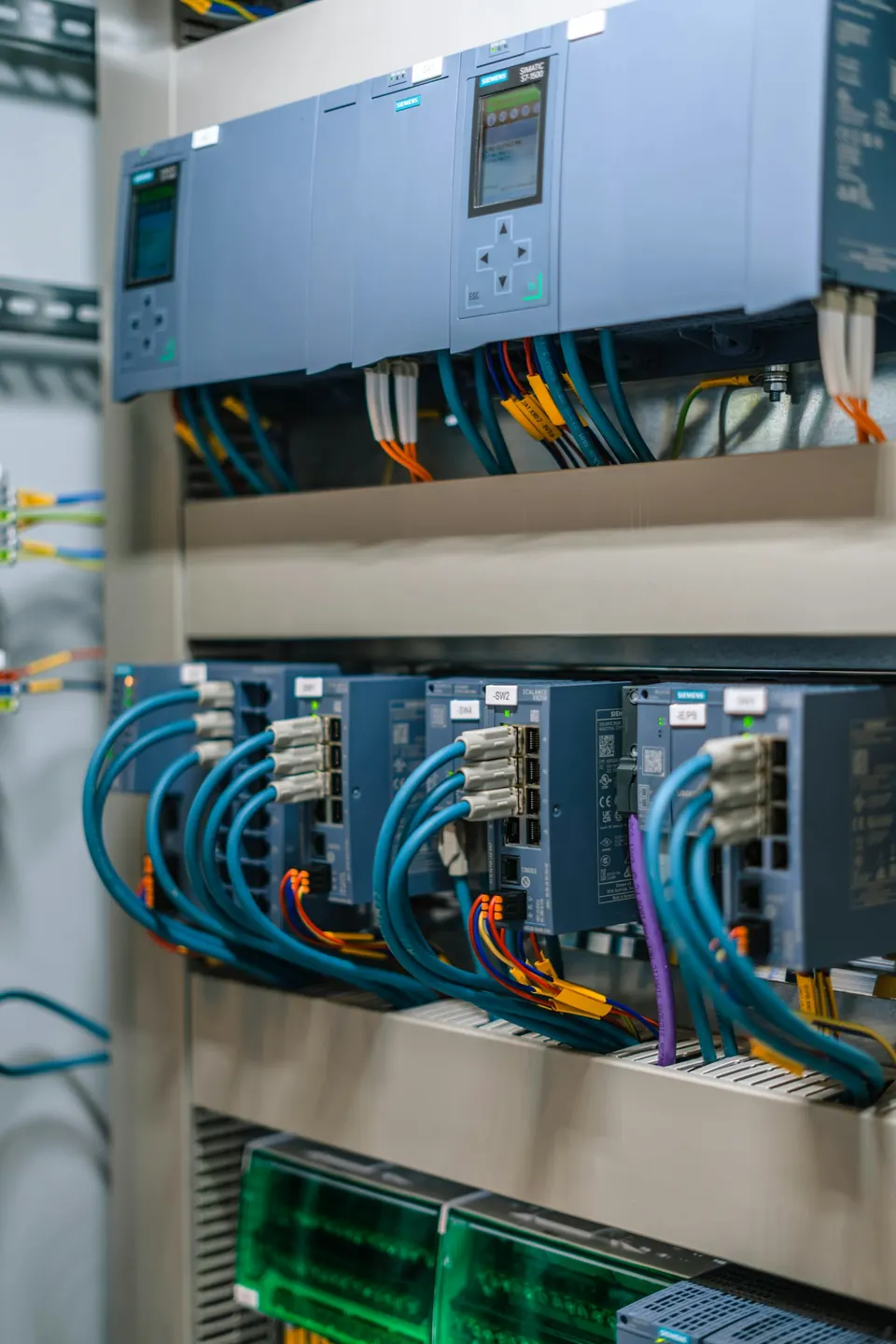
Connect assets, controls and business systems across facilities and infrastructure.
Note Imagery represents sector environments and is not presented as client work.
An assessment can map a workflow and its systems, surface manual handoffs and risks, and prioritise next steps. Outputs, timing and fees are agreed before work starts.
Define the operational problem, who it affects and what a useful result would look like.
Agree the systems, review outputs, responsibilities, timing and commercial terms.
Map the workflow and system dependencies, identify bottlenecks and risks, and prioritise recommendations within the agreed scope.
Review evidence against the agreed baseline and decide what to improve, stop or scale.
Immersive Tech leads client scope and delivery coordination. Specialist technical partners join when the work requires them, with responsibilities agreed before implementation.
Enterprise systems integration and delivery.
Immersive Tech delivered an enterprise API integration covering middleware, testing, production deployment and handover.
Detailed project references are shared only where authorised.
Practical guidance on integration risk, AI selection and turning delivery into business value.
The hardest integration problems are rarely only technical. Fragmented ownership, unclear handoffs and ungoverned interface decisions create avoidable delivery risk.
An interface can be technically correct and still fail the operation it is meant to support. When process owners, application teams, operational teams and delivery specialists work to different assumptions, defects often surface at handoffs rather than inside any single system.
Practical governance should define who owns the end-to-end workflow, who can approve interface changes and how exceptions are resolved. This is especially important where multiple agencies, vendors or operating units share dependencies but not reporting lines.
Start with the decision or workflow that needs improvement, then assess model fit, risk, operating cost and the level of human oversight required.
A credible AI use case has a defined user, decision, input and acceptable error boundary. The most capable general model is not automatically the best operational choice; latency, privacy, explainability, integration effort and inference or token costs can materially change the business case.
Controls must reflect how the system will behave after launch. Hallucinations, model and data drift, changing usage patterns and sensitive information handling all require named owners and review thresholds. Human oversight should be designed into the workflow, not added as a disclaimer.
Delivery is not value realisation. Benefits depend on adoption, workflow change, credible baselines and measurement that continues after implementation.
A programme can meet its technical milestones while leaving the underlying operation largely unchanged. If teams continue parallel spreadsheets, manual checks or legacy handoffs, the organisation absorbs the cost of new technology without receiving the intended efficiency or decision benefit.
Value measures should start with a defensible baseline and a clear link to the workflow being changed. Adoption signals, exception rates and operational measures help leaders decide what to adjust, what to stop and what is ready to scale.
What to expect when discussing your systems, processes and next steps.
We help organisations address disconnected systems, manual handoffs, inefficient processes, and technology investments that are not delivering expected value. We start with the business outcome, not a preselected product.
Not necessarily. We first review the systems and investments you already have, then assess whether integration, optimisation, or replacement offers the strongest measurable case.
Yes. We can map workflows, examine bottlenecks and root causes, establish baseline measures, and prioritise process improvements before recommending automation, integration, or applied AI.
Immersive Tech coordinates the engagement and brings in specialist delivery partners when appropriate. Roles, accountability, scope, and commercials are agreed for each project.
Begin with a discussion of one operational challenge. We clarify fit, the workflow and the desired decision, then agree scope, outputs, timing and commercial terms before any assessment or pilot begins.
Tell us which workflow, system or handoff needs attention. We’ll clarify fit and next steps, then agree scope, outputs, timing and commercial terms before any assessment begins.